
Celebrating the Life of Fatman Scoop: A Legendary Voice in Music
2 years ago


 United States
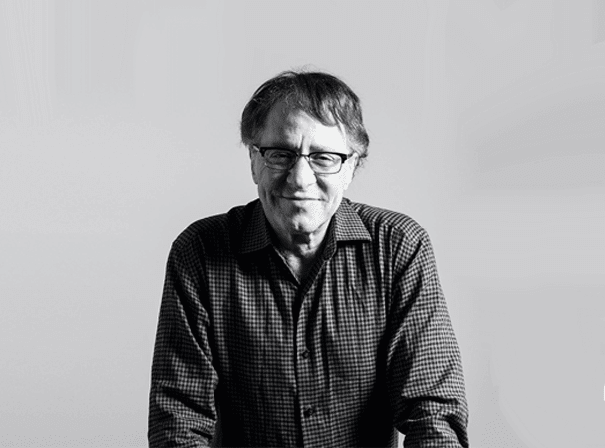
Ray Kurzweil is a renowned inventor, author, and futurist whose pioneering work in artificial intelligence and pattern recognition has shaped modern technology and informed his influential predictions about the future.
Legendary Futurist Dr. Ray Kurzweil joins Bessemer to discuss the AI economy, longevity escape velocity, and so much more.
Beyond Imagination, a robotics startup co-founded by futurist Ray Kurzweil, is looking to raise $100 million in a new funding round.
These days Kurzweil organizes his business interests—including FatKat and Ray & Terry's Longevity Products, which sells supplements—under the umbrella of...
In what looks like a match made in technology heaven, futurist / inventor Raymond Kurzweil has announced that he will be joining Google as the ... Director of Engineering.
He's worked with Stevie Wonder to create electronic musical synthesizers, has written New York Times bestsellers about the future, and has been compared ...
Raymond Kurzweil was born on February 12, 1948, in Queens, New York City, to secular Jewish parents who had emigrated from Austria. Early in his life, Kurzweil displayed an inventive curiosity, building robotic toys at a young age and becoming involved with computers by 1960. He developed pattern-recognition software that analyzed and synthesized music, which led to a national award and an appearance on television in 1965. His early experiences fostered a belief in the solvability of complex problems through technology. He pursued higher education at the Massachusetts Institute of Technology, earning a B.Sc. degree in computer science and literature in 1970.
Following his academic pursuits, Kurzweil established Kurzweil Computer Products, Inc., in 1974. Here, he led the development of the first omni-font optical character recognition (OCR) system, a significant advancement allowing computers to recognize diverse text fonts. This technology formed the basis for the Kurzweil Reading Machine, unveiled in 1976, which enabled blind individuals to hear text read aloud. This invention garnered attention, including from Stevie Wonder, who became a user of the first production model. Kurzweil continued to innovate, selling his OCR technology to LexisNexis for digital archiving and founding Kurzweil Music Systems in 1982 to create advanced electronic synthesizers, such as the Kurzweil K250, further bridging technology and the arts.
Throughout his career, Kurzweil has founded multiple successful businesses focused on artificial intelligence and its applications. His ventures include Kurzweil Applied Intelligence (KAI) for speech recognition systems and Kurzweil Educational Systems (KESI) for assistive technologies for individuals with learning disabilities. He has also ventured into financial technology with FatKat, an AI-driven hedge fund, and joined Google in 2012 as Director of Engineering, focusing on machine learning and natural language processing. Kurzweil is a prolific author, with five national best-selling books that explore the future of technology, artificial intelligence, and human longevity. His contributions have earned him numerous accolades, including the National Medal of Technology and the Technical Grammy Award.

Curious about our offerings or have inquiries? We're eager to assist!
Just complete the form, and we'll respond promptly.