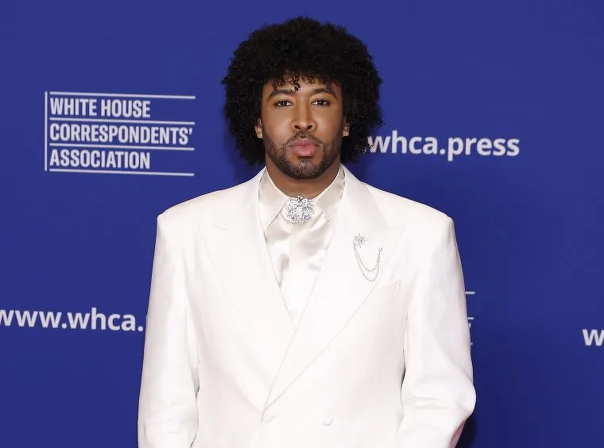


Montana Tucker to Headline Jewish Federation of Northeastern New York Event
1 year ago


 Canada
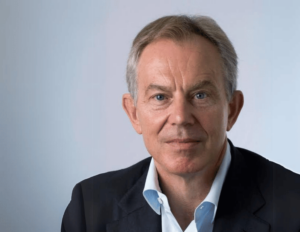
Rt. Hon. Joe Clark has transitioned from Canada's youngest Prime Minister to a respected elder statesman, author, and university professor, sharing insights on leadership and international affairs.
Joe Clark has been a Member of the Global Leadership Foundation since 2010 and served as the Foundation's Vice Chair from 2010 to 2019. He continues to serve.
Rt. Hon. Joe Clark, PC, CC, is a Member of the Advisory Council for the Canadian International Council. Other members include Mohammad Al-Zaibak, Current Senator, and Past Chair of the Canadian Arab Business Council.
Joe Clark was a founding member of Canadians for a New Partnership, and continues to draw together Indigenous and other Canadians, and has led Election Observation.
He chaired the original Cabinet Committee on the Canada-U.S. Free Trade Agreement, and was also chairman of the Commonwealth Committee of Foreign Ministers on.
In 2006, Clark became a professor at the Centre for Developing-Area Studies at McGill University. In 2015, he received an honorary Doctor of Laws (LL.D) from McGill University.
Charles Joseph Clark, born on June 5, 1939, in High River, Alberta, Canada, embarked on a political career marked by rapid ascent and significant contributions to Canadian public life. He earned a B.A. in history (1960) and an M.A. in political science (1973) from the University of Alberta. His political involvement began early, supporting the Progressive Conservative Party since 1957. From 1962 to 1965, he served as national president of the Progressive Conservative Student Federation. He further honed his political skills by directing Peter Lougheed’s successful campaign for premier of Alberta in 1967 and serving as executive assistant to Robert Stanfield, then the Conservative leader in the House of Commons, from 1967 to 1970. Clark was first elected to Parliament in 1972, representing the constituency of Rocky Mountain. His early career demonstrated a commitment to public service and a strategic understanding of Canadian politics.
Clark’s career reached a pivotal point in 1976 when he was elected leader of the Progressive Conservative Party. Despite being relatively unknown, he led the party to a minority government in the 1979 federal election, defeating Pierre Trudeau’s Liberal government and ending 16 years of Liberal rule. Taking office the day before his 40th birthday, Clark became the youngest Prime Minister in Canadian history. During his brief tenure from June 1979 to March 1980, his government prioritized freedom of information legislation, introducing Bill C-15, the Freedom of Information Act, which laid the groundwork for future access to information laws. He also played a role in the “Canadian Caper” rescue during the Iran hostage crisis. However, his government fell after only nine months on a budget question, leading to a general election in 1980 where his party was defeated.
After losing the leadership of the Progressive Conservative Party to Brian Mulroney in 1983, Clark continued to serve in Mulroney’s government as Secretary of State for External Affairs from 1984 to 1991. In this role, he took a strong stance against apartheid in South Africa and American intervention in Nicaragua, while also maintaining strong ties with the US and helping steer North American Free Trade Agreement negotiations. He later served as President of the Queen’s Privy Council and Minister responsible for Constitutional Affairs (1991–93), playing a key role in the Charlottetown Accord. After a period away from federal politics, during which he served as a United Nations special representative to Cyprus (1993) and founded his consulting firm, Clark returned to lead the Progressive Conservatives again in 1998 until 2003. He became a professor at McGill University in 2006 and authored “How We Lead: Canada in a Century of Change” (2013), continuing to contribute to public discourse as a writer and academic.

Curious about our offerings or have inquiries? We're eager to assist!
Just complete the form, and we'll respond promptly.