



Every version of your track is a separate recording, and search is starting to treat it that way
You made the remix. The extended mix is sitting on your hard drive, and there is a live recording from last summer’s show that people keep asking about. But if those versions go out with vague titles, recycled codes or missing credits, most listeners will never hear them. They can also split your streams, confuse your royalty reporting and bury the version that should be doing the work.
The fix is not complicated. It comes down to treating every version as its own recording, labelling it clearly and delivering it properly. Here is how to do it.
Why this matters right now
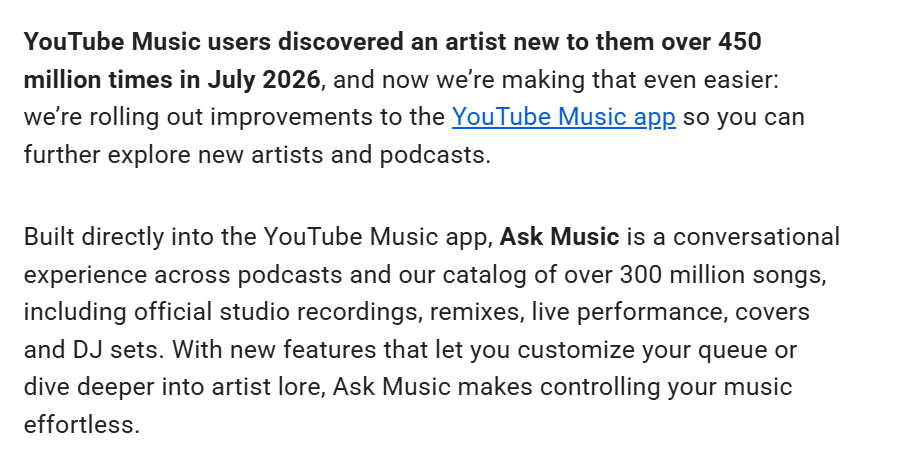
On 23 September 2026, YouTube announced Ask Music, a conversational tool that lets listeners describe what they want in everyday language. According to YouTube, it works across a catalogue of over 300 million songs, “including official studio recordings, remixes, live performance, covers and DJ sets.” YouTube also says its users discovered an artist new to them over 450 million times in July 2026.
Ask Music is still limited. The YouTube Music Help Centre says it is currently available to Premium members on mobile, in a set list of markets that includes the UK and US. YouTube has not published how it decides what to surface, so nobody can promise you a way to rank in it.
What you can control is whether your versions exist as clean, properly labelled releases in the first place. A remix that only lives as an unofficial upload, or an extended mix delivered with the same title as the original, gives any search system very little to work with. Listeners are being encouraged to ask for specific versions, not just songs. Your catalogue needs to be ready for that.
Step 1: Give every new version its own ISRC
An ISRC is the code that identifies a single recording. It follows that recording wherever it is released, and it is how streaming platforms and collecting societies match plays to payments.
The rule is simple. ISRC guidance from PPI, which issues ISRCs in Ireland, puts it plainly: “Any changes to the recording means you should assign a new code so the different versions can be identified from each other.” That covers remixes, edits, remasters and live versions. The reverse also applies. If the recording is unchanged, keep the same ISRC every time it is released, including on EPs and compilations.
Reusing the original’s code on a remix, or creating a fresh code for an identical recording, are two of the most common mistakes in dance releases. Both cause reporting problems that are hard to untangle later.
Step 2: Label the version in the title, the same way every time
Platforms rely on the track title to tell versions apart. The Apple Music Style Guide asks for version information in brackets after the title, using standard terms spelled out in full, such as (Remix), (Live), (Extended Mix), (Radio Edit) and (Instrumental).
In practice, name the remixer in the title, for example “Track Name (Artist Name Remix)”. Pick one term for each type of version and stick to it, rather than switching between Extended Mix, Club Mix and Long Version across releases. Avoid abbreviations like “Ext” or “Rmx”, which the style guide rules out.
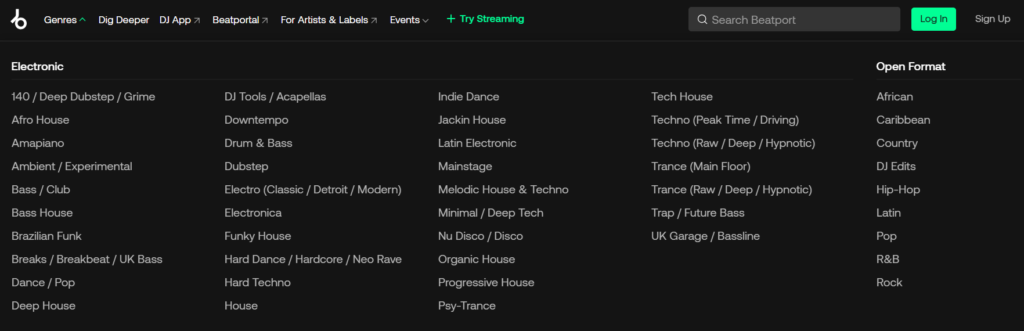
Dance stores already work this way. On Beatport, every track carries a mix name, which is why Original Mix and Extended Mix appear right across the store. Carrying the same discipline over to streaming keeps your catalogue consistent wherever someone finds it.
Step 3: Get the credits right
Credits are how platforms connect a version to the people who made it. Apple’s guide is specific here. The original artist stays as the primary artist, and the remixer is credited in the remixer role, not as a featured artist. Getting this wrong can push a remix onto the wrong artist profile or leave it missing from the remixer’s page.
For live versions, credit the performers who actually played on the recording, including any guests. If the recording was made by a venue, festival or broadcaster, confirm who owns it before you release it. A live recording is a new master, and it needs its own clearance.
Step 4: Understand how versions reach YouTube Music
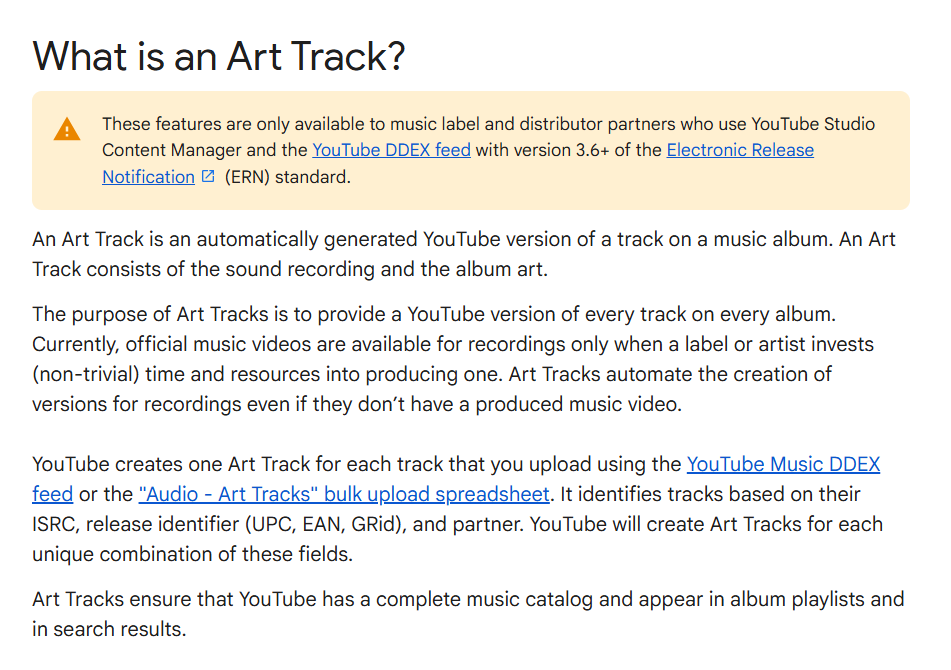
When your distributor delivers to YouTube, each track on a release can become an Art Track. YouTube describes an Art Track as “an automatically generated YouTube version of a track on a music album,” made up of the recording and the artwork. YouTube identifies each one using its ISRC and the release code.
That means your ISRCs and titles directly shape how versions appear on YouTube Music. An extended mix delivered with its own ISRC and a clear title becomes its own findable track. One delivered with duplicate data is far more likely to be confused with the original.
Earning from fan uploads that use your versions is a separate question, handled through Content ID.
Step 5: Treat DJ mixes differently
A continuous DJ mix is not the same as a remix. It contains other people’s recordings, so you need permission from the rights holders of every track in it before it can go to streaming platforms. Expect your distributor to ask for proof.
If you do not have those clearances, use platforms built for mixes. Mixcloud identifies each track within a mix and says it has deals with the major labels, over 250 independent labels through Merlin, and publishers and collecting societies including PRS. That gives your mixes a legitimate home while your fully cleared releases sit on the streaming platforms.
For more on clearing remixes and edits before release, read our guide to remixes, edits and bootlegs.
Step 6: Plan versions as part of the campaign
Versions work harder when they are planned rather than added as an afterthought. A common approach is to release the original and extended mix together, then follow with a remix package a few weeks later to give the track a second push. Live versions tend to land best later in the cycle, once the audience already knows the song.
The extended mix matters more than it used to. Apple Music now integrates with DJ software including rekordbox, Serato, Engine DJ and djay, so DJs can play straight from the streaming catalogue. A version with a longer intro and outro is the one a DJ can actually mix.
Common mistakes to avoid
Uploading a remix with the original’s ISRC. Using different version names for the same edit on different platforms. Crediting the remixer as a featured artist. Releasing a live recording without checking who owns it. Delivering a DJ mix full of uncleared tracks and waiting for the takedown.
Each of these is easy to prevent before release and painful to fix afterwards.
Get your versions released properly
If you have remixes, extended mixes or live recordings waiting to go out, the way they are delivered decides whether anyone finds them. MN2S Label Services handles distribution and release management for independent artists and labels, from release strategy to delivery across the major platforms. Get in touch to talk through your next release.
Check out the MN2S talent roster to book more artists and celebrities.
Related articles
 How to Get Funding for Your Next Release: Grants for Independent Artists in the US27 Oct 2026
 Releasing Music in Q4: How to Plan Around the Holiday Slowdown and Set Up January25 Oct 2026
 How to Make Your Back Catalogue Earn Again: A Practical Guide for Independent Labels22 Oct 2026
 Afro House, Amapiano or African? How to Choose the Right Beatport Genre for Crossover Releases20 Oct 2026
 How to Make the Most of ADE 2026: What to Film, What to Pack and How to Stay Reachable19 Oct 2026
 Why Your Song Credits Now Matter to Fans, Not Just Collection Societies15 Oct 2026