




A Great Remix Can Make a Career, But Only If It Is Cleared
In house, techno, and drum and bass, a strong remix has always been one of the fastest ways for an unknown producer to get in front of labels, DJs, and a wider audience. It takes an artist or track that already has an audience and puts your name and your sound directly in front of that audience. The problem is that most producers learn this the wrong way round. They make the remix first, upload it to SoundCloud or YouTube, and only think about clearance if it starts to get pulled down or a cease and desist arrives. Understanding what is actually allowed, and how to use remix culture properly, is what separates producers who build a genuine reputation from producers who keep losing their best work to takedowns.
Remix, VIP, Edit, or Bootleg: Know Which One You Are Making
These terms get used loosely, but they mean different things, and the distinction between an official remix, an edit, and a bootleg matters legally.
An official remix is one commissioned by the original artist or label. You are usually given the stems, the isolated vocal, drum, and instrumental parts, and sometimes the MIDI files, and there is often a fee or a profit share attached if your name helps sell the record.
A VIP is a producer reworking their own track, so no clearance issue exists at all. It gives you a fresh version for your own DJ sets while still riding the momentum of the original release.
An edit is a structural change to an existing track, extending an intro, tightening a breakdown, adjusting a transition, to make it easier to mix. The original audio usually stays intact, which still means you are working with someone else’s copyrighted material even if the edit feels minor.
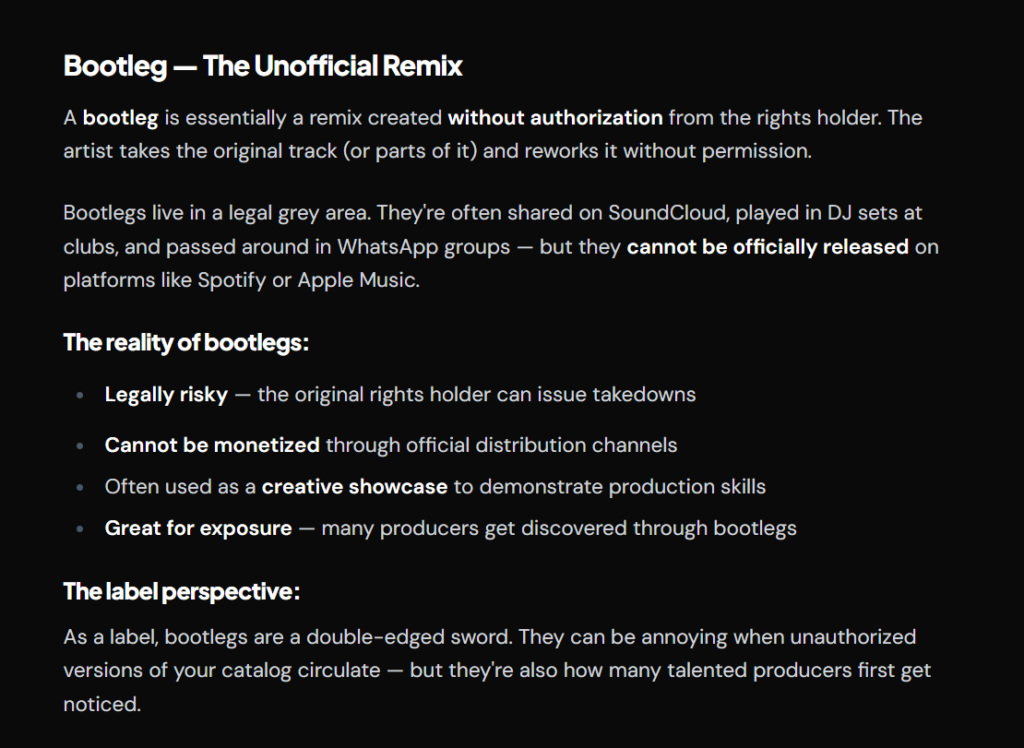
A bootleg is an unofficial remix made without permission, usually built from the finished stereo mix rather than proper stems because you never had access to the source material. Some of dance music’s most celebrated tracks started life as bootlegs. It is a legitimate way to show off production skill in a DJ set or a private edit pack, but releasing one publicly without clearance is a different matter entirely.
What Clearance Actually Involves
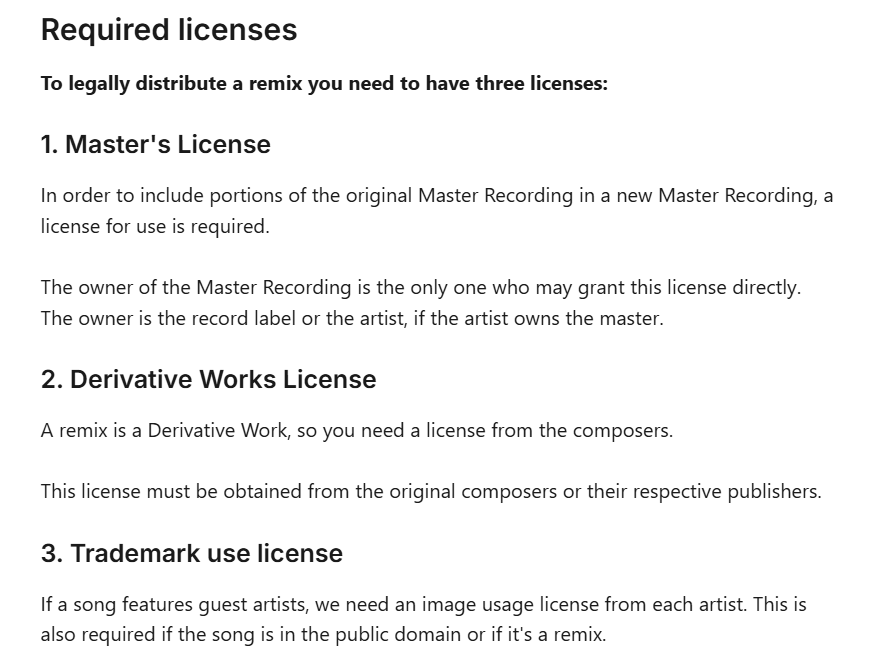
Releasing a remix properly, whether on streaming platforms, Beatport, or Traxsource, requires two separate licenses, because a piece of recorded music has two owners. The master recording, the actual audio, belongs to whoever owns that recording, usually the label or the artist if they own their masters. The underlying composition, the song itself, belongs to the songwriters and their publishers. You need permission from both before a remix can be legally distributed. This is why an official remix commission is so valuable. The label or artist granting you stems is effectively pre-clearing both sides of that permission for you.
Without that relationship, getting proper clearance after the fact is possible but not guaranteed. It is common in dance music for a bootleg that gains real traction to lead to exactly that conversation, with the original label or artist reaching out to turn an unofficial version into an official release once they see the demand. This has happened often enough in dance music that it is a genuine, if unpredictable, route in.
There is also a practical workaround some independent producers now use to release remix style material without needing permission for the original master at all. Instead of remixing the original recording, they use a licensed cover vocal paired with a mechanical license for the composition, which most distributors can arrange. It does not carry the same weight as an official remix of the original track, but it is a legal way to build remix style material into a catalogue without needing a label’s sign off first.
Using Remix Culture to Build a Reputation Properly
If you want remixing to actually move your career forward rather than just filling out your SoundCloud, a few approaches work consistently in house, techno, and drum and bass.
Enter official remix competitions. Platforms built specifically for this, including Beatport’s Label Radar, run remix contests where the licensing is already sorted out and the prize is often a genuine release or label connection rather than just exposure. This removes the clearance problem entirely and puts your remix in front of the label running the contest.
Reach out to smaller labels and artists directly. Bigger names get flooded with unofficial remix requests, but a label releasing a track that suits your sound may well say yes to a properly requested remix, especially if you can point to your existing production quality and audience.
Treat bootlegs and edits as a private tool, not a release strategy. Keep them in your DJ sets and private packs where they build your reputation among other DJs and promoters without creating a legal problem. If one takes off and people start asking where to buy it, that is your cue to approach the rights holder rather than upload it publicly yourself.
Track how much of your output is remix work. For many dance producers, remixes make up a meaningful share of total streams and can outperform original material, particularly early in a career. That is not a reason to stop writing original music. It is a reason to treat remixing as a genuine part of your release strategy rather than a side hobby.
Build Remix Work Into a Wider Release Strategy
A remix that gets properly cleared and released does more than add a track to your catalogue. It puts your name next to an artist with an existing audience, it gives DJs a reason to add you to a set, and it can be the thing a label notices before they ever hear your original productions. MN2S Label Services helps independent artists and labels handle exactly this kind of clearance, from securing remix rights through to licensing and sync opportunities that come from it. Get in touch to talk through your next remix or release.