
 Germany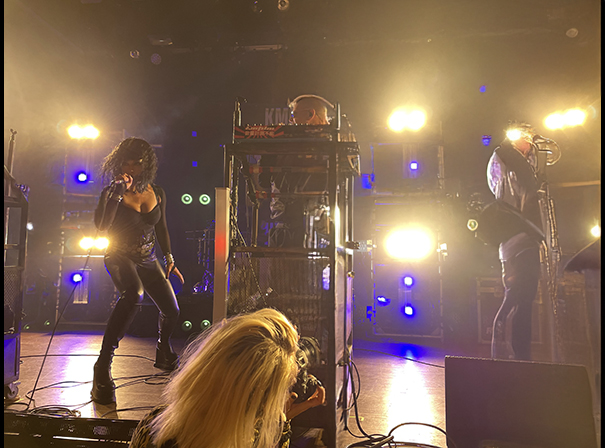

Bimini Headlines Fulham Pier for Hammersmith & Fulham’s Youth Arts Festival
10 hours ago


KMFDM has been a seminal force in industrial rock since its formation, pioneering the genre's path to mainstream audiences with a distinctive 'Ultra-Heavy Beat' sound.
KMFDM was founded in Paris, France, on February 29, 1984, by Sascha Konietzko and German painter Udo Sturm as a performance art project. Early performances were experimental, incorporating non-musical elements and a large troupe. After Sturm’s departure, Konietzko returned to Hamburg and collaborated with En Esch and Raymond Watts, refining the band’s musical direction. The band’s demo album, “Opium,” began circulating in underground clubs in 1984. Their debut album, “What Do You Know, Deutschland?”, was released in December 1986. This period established KMFDM’s early sound, characterized by sampling and electronic elements, and marked the beginning of their visual collaboration with artist Aidan ‘Brute!’ Hughes, who would define their album art.
KMFDM gained significant traction in the U.S. after signing with Wax Trax! Records for distribution. Their third album, “UAIOE” (1989), saw them touring the U.S. with Ministry, and the debut of guitarist Günter Schulz. The album “Naïve” (1990) yielded their first chart hit, a remix of its title track, reaching No. 21 on Billboard’s Dance/Club Play Songs Chart in March 1991. Following Konietzko and Esch’s move to Chicago, KMFDM deeply integrated into the city’s industrial music scene. “Money” (1992) produced two more club hits, “Vogue” (No. 19 on Billboard Dance/Club Play in April) and the title track (No. 36 in July), further cementing their presence. The band’s sixth album, “Angst” (1993), sold over 100,000 copies, and the single “A Drug Against War” (1994) received MTV airplay, marking their entry into mainstream consciousness. Their involvement with soundtracks for films like “Mortal Kombat” amplified their reach, with “Juke Joint Jezebel” becoming their most widely recognized song.
The mid-to-late 1990s represented KMFDM’s peak in commercial success, with albums like “Nihil” (1995) selling 209,000 copies and charting at No. 16 on Billboard’s Heatseekers. “Xtort” (1996) became their highest-charting album, reaching No. 92 on the Billboard 200 and selling over 200,000 copies. Despite a temporary disbandment in 1999 following “Adios,” KMFDM reformed in 2002. Under Metropolis Records, subsequent albums like “Attak” (2002) and “WWIII” (2003) continued to chart, with “WWIII” reaching No. 3 on Billboard’s Dance/Electronic Albums Chart. The band has sustained a consistent output, including “Tohuvabohu” (2007), “Blitz” (2009), “WTF?!” (2011), “Kunst” (2013), “Our Time Will Come” (2014), “Hell Yeah” (2017), “Paradise” (2019), and “Hyëna” (2022). Celebrating their 40th anniversary in 2024, KMFDM released “Let Go,” maintaining their distinctive blend of heavy metal riffs, electronic music, and politically charged lyrics.

Curious about our offerings or have inquiries? We're eager to assist!
Just complete the form, and we'll respond promptly.