

 United States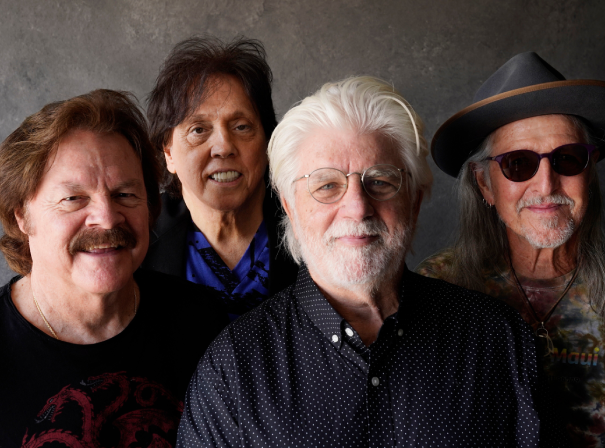
Daughtry to perform at SMACNA’s Annual Convention in Maui, Hawaii.
1 year ago


The Doobie Brothers maintained their relevance and popularity for over five decades by adapting their sound from Southern rock and blues to a commercially successful soft rock style, earning multiple Grammy Awards and global recognition.
Interested in booking The Doobie Brothers?
Request A ShowRichlyn Marketing coordinated the marketing and public relations for the upcoming release of The Doobie Brothers' highly-anticipated new album. Richlyn Marketing announced the addition of GRAMMY Award-winning rock and roll band The Doobie Brothers to its client roster.
Ted Templeman is noted as one of the earliest and most significant partnerships for The Doobie Brothers. His ability to blend different genres contributed to their sound. He produced every studio album by the band until 'Cycles' (1989) and later produced 'World Gone Crazy' (2010). Ted Templeman played percussion on the 1987 reunion tour, including on "What a Fool Believes," as he did on the original recording.
The Doobie Brothers, in conjunction with Sony Music Nashville, announced that their 14th studio album 'Southbound' would feature their greatest hits with lead and backing vocals from several country artists, and Michael McDonald returned to collaborate on the album.
In 2016, the Doobie Brothers signed under new management with Irving Azoff.
The Doobie Brothers formed in San Jose, California, in 1970. The initial lineup included vocalist-guitarist Tom Johnston, drummer John Hartman, bassist Dave Shogren, and guitarist Patrick Simmons. Their early sound, characterized by dual-lead guitars and layered vocal harmonies, resonated in Northern California’s biker bars. Producer Ted Templeman signed the band to Warner Brothers Records in late 1970 and produced their studio albums until 1989. While their self-titled debut album in 1971 did not immediately capture their live energy, their 1972 sophomore album, “Toulouse Street,” marked their breakthrough. This album featured hits like “Listen to the Music,” “Jesus Is Just Alright,” and “Rockin’ Down the Highway,” showcasing a more refined sound. The band expanded its lineup by adding bassist Tiran Porter and drummer Michael Hossack during this period. Subsequently, their third album, “The Captain and Me” (1973), achieved double-platinum sales, featuring tracks such as “Long Train Runnin'” and “China Grove,” which reached numbers 8 and 15 on the Billboard Hot 100 chart, respectively.
In 1974, their fourth album, “What Were Once Vices Are Now Habits,” yielded their first number-one hit, Patrick Simmons’ “Black Water.” During rehearsals for the album’s tour, Michael Hossack left the band abruptly and was replaced by Keith Knudsen. Jeff “Skunk” Baxter, formerly of Steely Dan, joined the band as a third lead guitarist. In 1975, Tom Johnston’s health issues led to the recruitment of vocalist-keyboardist Michael McDonald as a temporary replacement for the “Stampede” promotional tour. McDonald, having worked with Baxter in Steely Dan, brought a soul and gospel-infused keyboard style and distinct vocals that fundamentally altered the band’s sound.
Under Michael McDonald’s influence, the Doobie Brothers transitioned from their earlier rock and roll sound to a more soft rock and blue-eyed soul style. The 1976 album “Takin’ It to the Streets” introduced this new direction, featuring the hit title track and “It Keeps You Runnin’,” both written by McDonald. Their 1978 album, “Minute by Minute,” became a chart-topping success, propelled by the title track and the number-one hit “What a Fool Believes,” co-written by McDonald and Kenny Loggins. “What a Fool Believes” earned a Grammy Award for Record of the Year in 1980, and the album received a Grammy for Pop Vocal Performance by a Group. By 1979, John Hartman and Jeff Baxter departed, replaced by John McFee and Chet McCracken. Despite continued success with hits like “Real Love” from their 1980 album “One Step Closer,” the band faced internal creative conflicts and the pressures of touring, leading to their disbandment in 1982. A successful reunion tour in 1987, featuring multiple former members, sparked their permanent reformation, leading to the release of “Cycles” in 1989, which included the Top 10 single “The Doctor.” The Doobie Brothers were inducted into the Vocal Group Hall of Fame in 2004 and the Rock and Roll Hall of Fame in 2020.

Curious about our offerings or have inquiries? We're eager to assist!
Just complete the form, and we'll respond promptly.