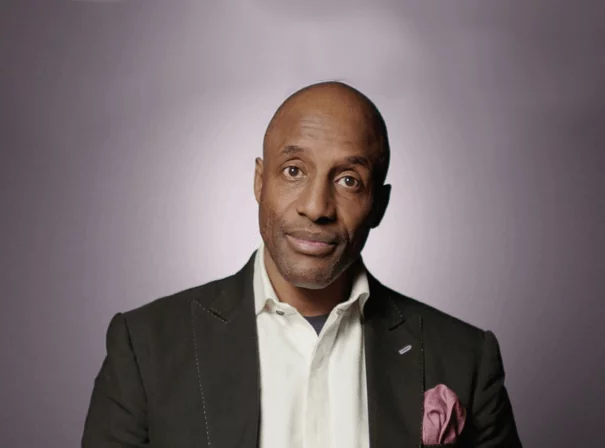



Dr. Tara interviewed for BBC Radio London
1 year ago


 United States
Jamie Kalven, a distinguished author and journalist, is the founder of the Invisible Institute, a non-profit journalism organization dedicated to transparency and accountability in Chicago.
Jamie Kalven is the founder and former executive director of the Invisible Institute, a non-profit journalism production company on the South Side of Chicago. The organization arose out of Kalven's work during the final chapter of high-rise public housing in Chicago, and focuses on police accountability and justice. Under his leadership, the Invisible Institute has received significant accolades, including a Pulitzer Prize.
Jamie Kalven is an author and journalist whose work, including the award-winning 'Code of Silence,' has been published by The Intercept. He has contributed multiple posts covering issues such as police misconduct, racism within the Chicago Police Department, and analyses of police killings.
Jamie Kalven collaborated with Craig Futterman, an attorney at the Mandel Legal Aid Clinic at the University of Chicago Law School, on litigation related to police misconduct records. He also co-authored a report entitled "'They Have All the Power': Youth/Police Encounters on Chicago's South Side" with Futterman and Chaclyn Hunt, published by the University of Chicago Law School.
W. W. Norton published Jamie Kalven's memoir, "Working with Available Light: A Family's World After Violence," in 1999. This book details the emotional aftermath of his wife's sexual assault and focuses on understanding violence, poverty, and racial divisions.
Harper & Row published "A Worthy Tradition: Freedom of Speech in America" in 1988, a book edited by Jamie Kalven based on the unfinished manuscript of his late father, Harry Kalven.
Jamie Kalven contributed a chapter titled "'Do You Know Where You Are?': A Memoir of Becoming a South Sider" to the book "Teaching for Social Justice: A Democracy and Education Reader," which was published by New Press and Teachers College Press in 1998.
Jamie Kalven served as a visiting practitioner-in-residence at the Kenan Institute for Ethics at Duke University in 2017, where he discussed police abuse, impunity, and the exposure of police cover-ups.
Jamie Kalven, born in Chicago in 1948, is an American journalist, author, human rights activist, and community organizer. A lifelong resident of Chicago’s South Side, he graduated from Wesleyan University in 1969. His early career aspirations as a foreign correspondent were altered after a significant event in Bangladesh during the Indo-Pakistani War of 1971, leading him to pursue journalism domestically. Following his father Harry Kalven’s death in 1974, Jamie spent 14 years completing his father’s unfinished manuscript, “A Worthy Tradition: Freedom of Speech in America,” published in 1988, demonstrating his commitment to intellectual legacy.
Kalven’s work shifted towards human rights activism after a personal tragedy in 1988, when his wife, Patricia Evans, was sexually assaulted. This event spurred him to investigate the root causes of violence, poverty, and racial divisions, leading to his memoir, “Working with Available Light: A Family’s World After Violence,” published in 1999. In the 1990s, Kalven became deeply involved in the Stateway Gardens housing development in Chicago, reporting on living conditions and police misconduct. He founded the Invisible Institute as an informal journalism and community organizing team, initially publishing his findings on a webzine called “The View from the Ground.” His persistent efforts led to a landmark legal victory in 2014, “Kalven v. City of Chicago,” establishing police misconduct records as public information under the Illinois Freedom of Information Act.
After this victory, the Invisible Institute formalized into a non-profit organization, becoming a central hub for police misconduct data. Kalven gained national recognition for his reporting on the 2014 murder of Laquan McDonald, where he obtained and revealed the autopsy report contradicting official police accounts. His work on this case earned him significant accolades, including the George Polk Award and the Ridenhour Courage Prize. Under his leadership, the Invisible Institute won the 2021 Pulitzer Prize for National Reporting. Kalven stepped down as director in 2021 and was awarded the I. F. Stone Medal for Journalistic Independence in 2022, continuing his focus on human rights reporting.

Curious about our offerings or have inquiries? We're eager to assist!
Just complete the form, and we'll respond promptly.