


Bimini Headlines Fulham Pier for Hammersmith & Fulham’s Youth Arts Festival
2 days ago


 India
India
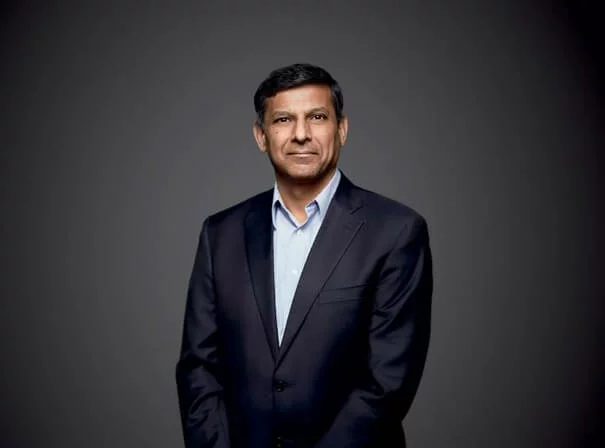
Raghuram Rajan is an acclaimed economist and former Governor of the Reserve Bank of India, known for his insights into global financial stability and economic policy.
Rajan is the Chairman of the Group of Thirty, an international body of leading financiers and economists.
Rajan is the Chairman of the Per Jacobsson Foundation.
Rajan serves as a senior economic advisor to BDT&MSD.
Rajan is a managing director at Andersen.
Raghuram Rajan shared insights on India's economic future, innovation, and crucial aspects of economic development at a distinguished speaker event.
Rajan's research interests intersect with INET's focus on banking, corporate finance, and the role of finance in economic development.
Rajan is recognized as an expert by Global Affairs, with his research focusing on banking, corporate finance, and economic development, including publishing books like 'Breaking the Mold'.
Rajan is an agenda contributor for the World Economic Forum, recognized as an Indian economist and Katherine Dusak Miller Distinguished Service Professor of Finance at the University of Chicago Booth School of Business.
Raghuram Rajan engaged in discussions on empowering individuals at both community and international levels for Episode 62.
Rajan is a Fellow at the Hoover Institution, with research interests in banking, corporate finance, and economic development, particularly the role of finance.
Raghuram Rajan is listed as the Katherine Dusak Miller Distinguished Service Professor of Finance at The University of Chicago Booth School of Business, with extensive experience.
Rajan offers strategies for accelerating economic development, emphasizing investments in human capital, fostering creativity, and improving infrastructure.
Raghuram Rajan is the Eric J. Gleacher Distinguished Service Professor of Finance at the University of Chicago's Graduate School of Business and a contributor to CEPR.
Raghuram Govind Rajan was born on February 3, 1963, in Bhopal, Madhya Pradesh, India. His early life involved living in various countries due to his father’s work with the Intelligence Bureau and later the Research and Analysis Wing. He attended Delhi Public School, R. K. Puram, from 1974 to 1981, followed by the Indian Institute of Technology Delhi, where he earned a bachelor’s degree in electrical engineering in 1985. He then pursued a Post Graduate Diploma in Management (equivalent to an MBA) from the Indian Institute of Management Ahmedabad, graduating in 1987. Rajan continued his academic journey at the Massachusetts Institute of Technology, where he received a PhD in 1991 for his thesis “Essays on Banking,” which examined the evolving nature of financial systems.
Rajan began his academic career in 1991 as an assistant professor of finance at the Booth School of Business at the University of Chicago, becoming a full professor in 1995. His work has focused on banking, corporate finance, and economic development, significantly contributing to the understanding of financial institutions and their role in economic growth. He is particularly recognized for his prescient warnings about the risks in the financial system before the 2008 financial crisis, a topic he elaborated on in his 2010 book, “Fault Lines: How Hidden Fractures Still Threaten the World Economy.” In 2003, he was awarded the inaugural Fischer Black Prize by the American Finance Association for his significant contributions to finance.
From 2003 to 2006, Rajan served as the Chief Economist of the International Monetary Fund, becoming the youngest individual and the first from an emerging-market nation to hold this position. He returned to India as the Chief Economic Adviser to the Ministry of Finance from 2012 to 2013, before being appointed the 23rd Governor of the Reserve Bank of India, serving from 2013 to 2016. During his tenure at the RBI, he prioritized curbing inflation, which significantly decreased under his leadership. He also became the Vice-Chairman of the Bank for International Settlements in 2015. After completing his term at the RBI, Rajan returned to academia at the University of Chicago Booth School of Business, where he continues to contribute to economic discourse and research.

Curious about our offerings or have inquiries? We're eager to assist!
Just complete the form, and we'll respond promptly.