
 India
India 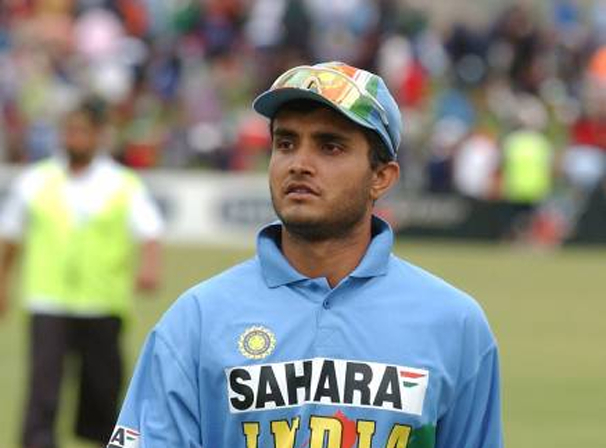

Talent Profiles: Black History Month
2 years ago


Sourav Ganguly transitioned from a distinguished international cricketer to a notable sports administrator and media personality, sharing insights and leadership from his extensive career.
Ganguly has become one of the most sought-after brand ambassadors in India, with over 40 leading brands placing their trust in him. He endorses brands across sectors like EdTech, technology, UPSC coaching, tourism, and manufacturing, symbolizing innovation and trust.
Myntra partnered with Sourav Ganguly to launch a premium ethnic wear brand called 'Souragya' as a 50-50 joint venture, blending his personal insights into ethnic fashion with Myntra's platform, particularly ahead of the Durga Puja shopping season.
Sourav Ganguly has worked with brands like Beurer and Bisk Farm as part of his endorsement portfolio.
Sourav Ganguly took on a brand ambassador role for Casagrand starting in August.
Cricket Legend Sourav Ganguly was appointed as the brand ambassador to lead the charge for the Bhartiya Corporate Premier League (BCPL) 2025.
Sourav Ganguly has been associated with My11Circle as a brand endorser.
Sourav Ganguly has endorsed Bandhan Bank.
Sourav Ganguly served as a brand endorser for Dabur Chyawanprash.
Sourav Ganguly endorsed Coca-Cola's Kinley product.
Sourav Ganguly endorsed Mankind Pharma.
Olyv, a digital lending platform, partnered with former cricketer Sourav Ganguly as its brand ambassador to collaborate on promotional activities.
Sourav Ganguly has been a prominent face for the Fortune brand.
Sourav Ganguly endorsed Puma.
Sourav Ganguly was the face of Tata Tetley.
Sourav Ganguly endorsed Classmate.
Sourav Ganguly has recently endorsed Livinguard.
Sourav Chandidas Ganguly, born on July 8, 1972, in Calcutta (now Kolkata), India, embarked on his cricket journey influenced by his elder brother, Snehasish Ganguly. Starting as a right-handed individual, he adopted a left-handed batting style to use his brother’s equipment, eventually developing into a formidable batsman. His first-class debut for the Bengal state team in the 1989–90 season was a success, with Bengal winning the Ranji Trophy. Despite an initial brief and underwhelming One Day International (ODI) appearance in 1992, where he scored three runs against the West Indies, Ganguly dedicated himself to domestic cricket. He accumulated significant runs in the 1993–94 and 1994–95 Ranji seasons, which led to his recall to the Indian national team for a tour of England in 1996.
Ganguly’s return to international cricket in 1996 marked a turning point. He made his Test debut at Lord’s Cricket Ground, scoring 131 runs, a distinctive achievement for a debutant at that venue. He followed this with another century in the subsequent Test match at Trent Bridge, becoming one of only three batsmen to score centuries in each of their first two Test innings. In 1997, he began opening in ODIs, forming a successful partnership with Sachin Tendulkar and scoring his first ODI century against Sri Lanka. His 183 runs against Sri Lanka in the 1999 World Cup stood as the highest score by an Indian in the tournament for an extended period, showcasing his impact as a batsman. He became known for his aggressive style of play, particularly against left-arm spin bowlers, using strong shots to the off-side. His relationship with coach John Wright was instrumental in fostering a disciplined and competitive Indian team, with a focus on fitness and developing young talent.
In the early 2000s, amid a match-fixing scandal, Ganguly assumed the captaincy of the Indian cricket team after Sachin Tendulkar’s resignation. He led India to significant victories, including a 2-1 Test series win against Australia in 2001 and the 2002 NatWest Trophy, famously celebrating by taking off his shirt at Lord’s. Under his leadership, India also won the 2002 ICC Champions Trophy and reached the final of the 2003 Cricket World Cup. He nurtured young players like Zaheer Khan, Yuvraj Singh, and Mohammad Kaif, integrating them effectively into the team. Ganguly’s captaincy was marked by an ability to secure overseas Test victories, a rare feat for India at the time. After experiencing a dip in individual form and a public dispute with coach Greg Chappell in 2005, he was temporarily dropped from the team but made a successful comeback in 2006, continuing to contribute significantly with both bat and ball until his international retirement in 2008. He transitioned to roles in the Indian Premier League (IPL) and subsequently into cricket administration, becoming the President of the Cricket Association of Bengal and later the President of the Board of Control for Cricket in India.

Curious about our offerings or have inquiries? We're eager to assist!
Just complete the form, and we'll respond promptly.