







Brand activations  6th June 2025
6th June 2025 

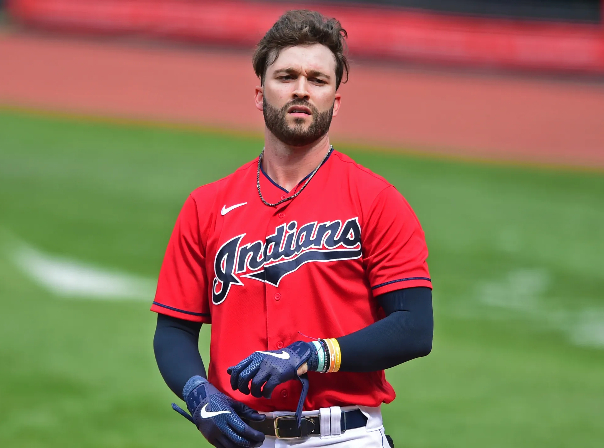
Tyler Naquin, a name familiar to baseball enthusiasts, carved his path from the fields of Spring, Texas, to the bright lights of Major League Baseball. Growing up in a household that favored the Astros and attending Klein Collins High School, he found his rhythm early. It wasn’t just talent that set him apart; it was a relentless hustle that led to accolades like All-State honors. The Baltimore Orioles noticed in 2009, but Naquin opted for Texas A&M, where he soon became the Big 12 Conference Player of the Year, proving that he could keep pace with the best.
Drafted by the Cleveland Indians in 2012, his journey with the franchise was marked by highs and lows. His rookie year in 2016 dazzled fans; he hit an inside-the-park home run that had not graced Cleveland since 1916. But within the excitement of such moments, hard truths lay hidden. Injuries plagued him, transforming what could have been a shimmering career into a series of comebacks that felt more like a dance with fate. He hit .216 in a rough 2017 season, often caught between the promise of youth and the weight of expectations.
Naquin bounced around, playing for the Reds, Mets, and more recently the White Sox, suggesting that his potential was always just a flicker away from flame. In 2022, he found himself traded to the Mets, and his average dipped again, raising questions about his future. Did he lose his way, or was he merely adapting to an unyielding game? Perhaps both.
By 2025, Naquin had reinvented himself again, shifting from outfield to pitcher with the Guardians. The mere thought of such a shift speaks volumes—an acknowledgment of uncertainty in a sport where fleeting moments define legacies. Naquin’s story isn’t just one of statistics; it’s about resilience and the messy reality of pursuing dreams amidst relentless challenges. It seems, in the end, that persistence isn’t everything; it’s merely part of the equation for survival in baseball.

Looking for a different kind of talent? Browse our other talent rosters below to find the right talent to fit.