

Tucker Carlson Set to Speak at LIVEX 2026 in Abu Dhabi
2 months ago


 United Kingdom
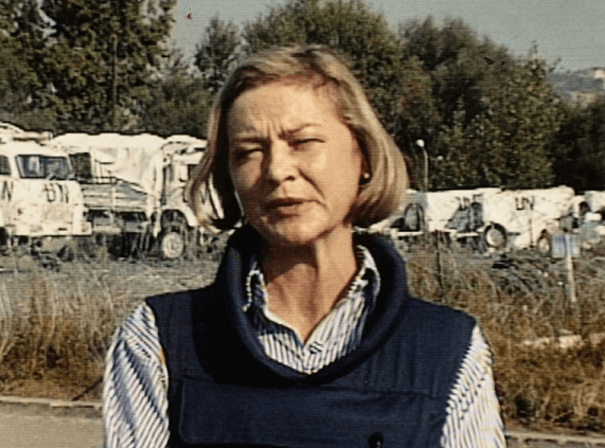
Kate Adie is a highly respected journalist and war correspondent recognized for her pioneering work in frontline reporting for the BBC.
A specially curated collection cataloging the life and work of world-renowned BBC journalist and author, Kate Adie, through her professional papers, notebooks and artifacts.
Appointed as ambassador for SSAFA, the UK’s oldest military charity.
Serves as an ambassador for SkillForce, an organization supporting education.
Serves as an ambassador for the non-governmental organization Farm Africa.
Became an Ambassador for the medical charity Overseas Plastic Surgery Appeal (OPSA).
Participated in a charity event for the Sunderland A.F.C. charity Foundation of Light.
Appointed Chancellor of Bournemouth University and delivered an address emphasizing verification of news sources to postgraduate journalism students.
Kathryn Adie, born on September 19, 1945, in Whitley Bay, Northumberland, was adopted as a baby and grew up in Sunderland. She pursued her education at Sunderland Church High School and later obtained a degree in Swedish and Icelandic studies from the University of Newcastle upon Tyne. Her broadcasting career commenced at BBC Radio Durham after graduation, followed by a period at Radio Bristol from 1971 to 1975, where she hosted ‘Womanwise’. These early roles in local radio laid the foundation for her transition into national news.
Adie gained significant recognition in 1980 while working as a BBC national television news reporter. She was the first on the scene to report live and unscripted during the Iranian Embassy siege in London, which propelled her into the national spotlight. Following this, she consistently covered major global events throughout the 1980s, including The Troubles in Northern Ireland, the American bombing of Tripoli in 1986, and the Lockerbie bombing in 1988. Her impactful reporting led to her promotion to Chief News Correspondent for BBC News in 1989, a role she held for 14 years. During this period, Adie reported from numerous conflict zones, including the Tiananmen Square protests in 1989, the Gulf War, conflicts in the former Yugoslavia, the 1994 Rwandan genocide, and the war in Sierra Leone in 2000. She retired from the BBC in early 2003, transitioning to freelance journalism and becoming a regular presenter for ‘From Our Own Correspondent’ on BBC Radio 4.
Over her career, Adie became known for her direct and factual reporting style, often working in dangerous environments. She received an OBE in the 1993 New Year Honours and was appointed a Commander of the Order of the British Empire (CBE) in the 2018 Birthday Honours. Her significant contributions to journalism were further recognized with a BAFTA Fellowship in 2018. In 2019, she became the Chancellor of Bournemouth University, emphasizing the importance of verified news sources in her address to journalism students. She has also authored several books, including her autobiography ‘The Kindness of Strangers’ (2002), and ‘Corsets to Camouflage: Women and War’ (2003). Her professional papers and artifacts were donated to the University of Sunderland Special Collections in 2005.

Curious about our offerings or have inquiries? We're eager to assist!
Just complete the form, and we'll respond promptly.