
 United States
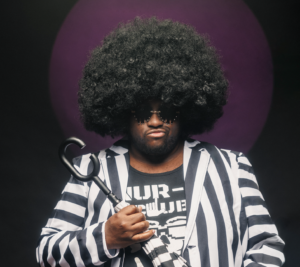
New Signing: Nur-D
2 years ago


Stevie Wonder is a revered singer-songwriter and multi-instrumentalist whose innovative contributions have significantly shaped pop, R&B, soul, and funk music for over six decades.
Interested in booking Stevie Wonder?
Request A ShowStevie Wonder has collaborated with Paul McCartney on multiple occasions, including the 1982 duet "Ebony and Ivory," a song promoting racial harmony that became a number one hit. They also participated in a jam session in 1974 that was later released as the bootleg album 'A Toot and a Snore in '74'.
Stevie Wonder played harmonica on Elton John's 1983 song "I Guess That's Why They Call It the Blues."
Wonder's album 'Music of My Mind' (1972) marked the beginning of his collaboration with Tonto's Expanding Head Band, an electronic group whose use of synthesizers influenced Wonder's musical direction. The collaboration continued, further shaping his sound.
Syreeta Wright, songwriter and former Motown secretary, was married to Stevie Wonder from 1970 to 1972. They frequently collaborated musically, with Wright contributing to lyrics on albums like 'Where I'm Coming From' (1971) and Wonder co-writing and producing her 1974 album 'Stevie Wonder Presents: Syreeta'. Their musical collaboration continued even after their divorce.
Around the release of his album 'Talking Book' (1972), Wonder toured with the Rolling Stones, a partnership that helped alleviate his pigeonholed image as an R&B artist in America and contributed to the success of his singles.
Stevie Wonder played harmonica on two tracks of Billy Preston's 1975 album 'It's My Pleasure'.
In 1979, Stevie Wonder wrote and produced the dance hit "Let's Get Serious" for Jermaine Jackson, which became the number one R&B single of 1980.
Dizzy Gillespie was featured on Stevie Wonder's ten-minute funk classic "Do I Do," released in 1982 as part of 'Stevie Wonder's Original Musiquarium I'.
In 1983, Wonder performed the song "Stay Gold," the theme to Francis Ford Coppola's film adaptation of S. E. Hinton's novel 'The Outsiders', for which Wonder wrote the lyrics.
Dionne Warwick made a guest appearance on Stevie Wonder's 1984 soundtrack album for 'The Woman in Red', singing the duet "It's You" with him.
Wonder played his signature harmonica on Chaka Khan's 1985 cover of Prince's "I Feel For You," alongside Melle Mel.
Stevie Wonder played harmonica on Eurythmics' 1985 single "There Must Be an Angel (Playing with My Heart)."
Wonder was a featured artist in the all-star charity single for African famine relief, "We Are the World" (1985).
Wonder played harmonica on the song "If Ever" on John Denver's 1986 album 'Dreamland Express', a song Wonder co-wrote with Stephanie Andrews.
Stevie Wonder wrote the track "I Do Love You" for The Beach Boys' 1985 self-titled album.
Stevie Wonder played harmonica on "Can't Help Lovin' That Man" on Barbra Streisand's 1986 album 'The Broadway Album'.
Wonder appeared on Michael Jackson's 1987 'Bad' album on the duet "Just Good Friends." Jackson also sang a duet with Wonder titled "Get It" on Wonder's 1987 album 'Characters'.
Wonder played harmonica on a remake of his own song, "Have a Talk with God," on Jon Gibson's 1989 album 'Body & Soul'.
Wonder recorded a soundtrack album for Spike Lee's 1991 film 'Jungle Fever' and contributed two new songs ("Misrepresented People" and "Some Years Ago") to the soundtrack for Lee's 2000 film 'Bamboozled'.
Wonder played harmonica on the track "Deuce" (sung by Lenny Kravitz) for the 1994 tribute album 'Kiss My Ass: Classic Kiss Regrooved'.
Wonder collaborated with Babyface in 1997 on "How Come, How Long," a song about domestic violence that was nominated for a Grammy Award.
Stevie Wonder played harmonica on Sting's 1999 song "Brand New Day."
In June 2006, Wonder made a guest appearance on Busta Rhymes' album 'The Big Bang' on the track "Been through the Storm," singing the refrain and playing the piano.
Wonder appeared on the last track of Snoop Dogg's 2006 album 'Tha Blue Carpet Treatment', "Conversations," which is a remake of "Have a Talk with God" from 'Songs in the Key of Life'.
In 2006, Wonder staged a duet with Andrea Bocelli on the latter's album 'Amore', offering harmonica and additional vocals on "Canzoni Stonate."
Wonder's harmonica playing can be heard on the 2009 Grammy-nominated track "Never Give You Up," featuring CJ Hilton and Raphael Saadiq.
Wonder appeared on singer Celine Dion's studio album 'Loved Me Back to Life' (2013), performing a cover of his 1985 song "Overjoyed."
Stevie Wonder was featured on two tracks on Mark Ronson's 2015 album 'Uptown Special'.
Stevie Wonder was featured on the track "Stop Trying to Be God" on Travis Scott's 2018 album 'Astroworld'.
Cordae visits the 'Breakfast Club' ahead of his album 'From a Bird's Eye View' to discuss two major collaborations, including one with Stevie Wonder.
Stevland Hardaway Judkins, known professionally as Stevie Wonder, was born on May 13, 1950, in Saginaw, Michigan. Blind shortly after birth due to retinopathy of prematurity, he demonstrated musical talent from an early age, proficient in piano, harmonica, and drums. He signed with Motown’s Tamla label at age 11, adopting the stage name Little Stevie Wonder. His debut album, “The Jazz Soul of Little Stevie” (1962), and its follow-up, “Tribute to Uncle Ray” (1962), showcased his budding artistry. At 13, he achieved national success with “Fingertips,” a number one hit on the Billboard Hot 100, becoming the youngest solo artist to top the chart. As he matured, Wonder shed the “Little” from his name and, encouraged by producer Sylvia Moy, continued to produce hits like “Uptight (Everything’s Alright)” and “I Was Made to Love Her,” while also contributing to Motown’s songwriting department. By age 21, Wonder renegotiated his contract with Motown, gaining creative autonomy that would define his subsequent career.
The 1970s marked Wonder’s “classic period,” characterized by a string of critically acclaimed albums that expanded beyond traditional pop structures with cohesive thematic statements and complex compositions. Albums such as “Music of My Mind” (1972), “Talking Book” (1972), “Innervisions” (1973), “Fulfillingness’ First Finale” (1974), and “Songs in the Key of Life” (1976) garnered numerous Grammy Awards, with the last three consecutively winning Album of the Year. This decade featured iconic singles like “Superstition,” “You Are the Sunshine of My Life,” “Higher Ground,” and “Sir Duke,” showcasing his mastery of synthesizers and multi-instrumental abilities. Wonder’s influence during this era extended to his political activism, notably his campaign to establish Martin Luther King Jr.’s birthday as a federal holiday in the United States. He also suffered a serious automobile accident in 1973, which resulted in a partial loss of his sense of smell and temporary loss of taste.
Throughout the 1980s, Wonder maintained high commercial success, with hits like “I Just Called to Say I Love You,” which won an Academy Award in 1985, and “Part-Time Lover.” He engaged in high-profile collaborations with artists including Paul McCartney and Michael Jackson, and continued his humanitarian efforts, including contributions to African famine relief. In the 1990s and 2000s, Wonder continued to release new music, tour, and collaborate with contemporary artists, receiving numerous lifetime achievement awards and honorary degrees. In 2024, he was conferred Ghanaian citizenship, reflecting his deep connection to Africa and ongoing commitment to political and social causes.

Curious about our offerings or have inquiries? We're eager to assist!
Just complete the form, and we'll respond promptly.